Carpet and Flooring Damage in Short-Term Rentals: Why Your Claim Will Probably Get Denied
Feb 5, 2026
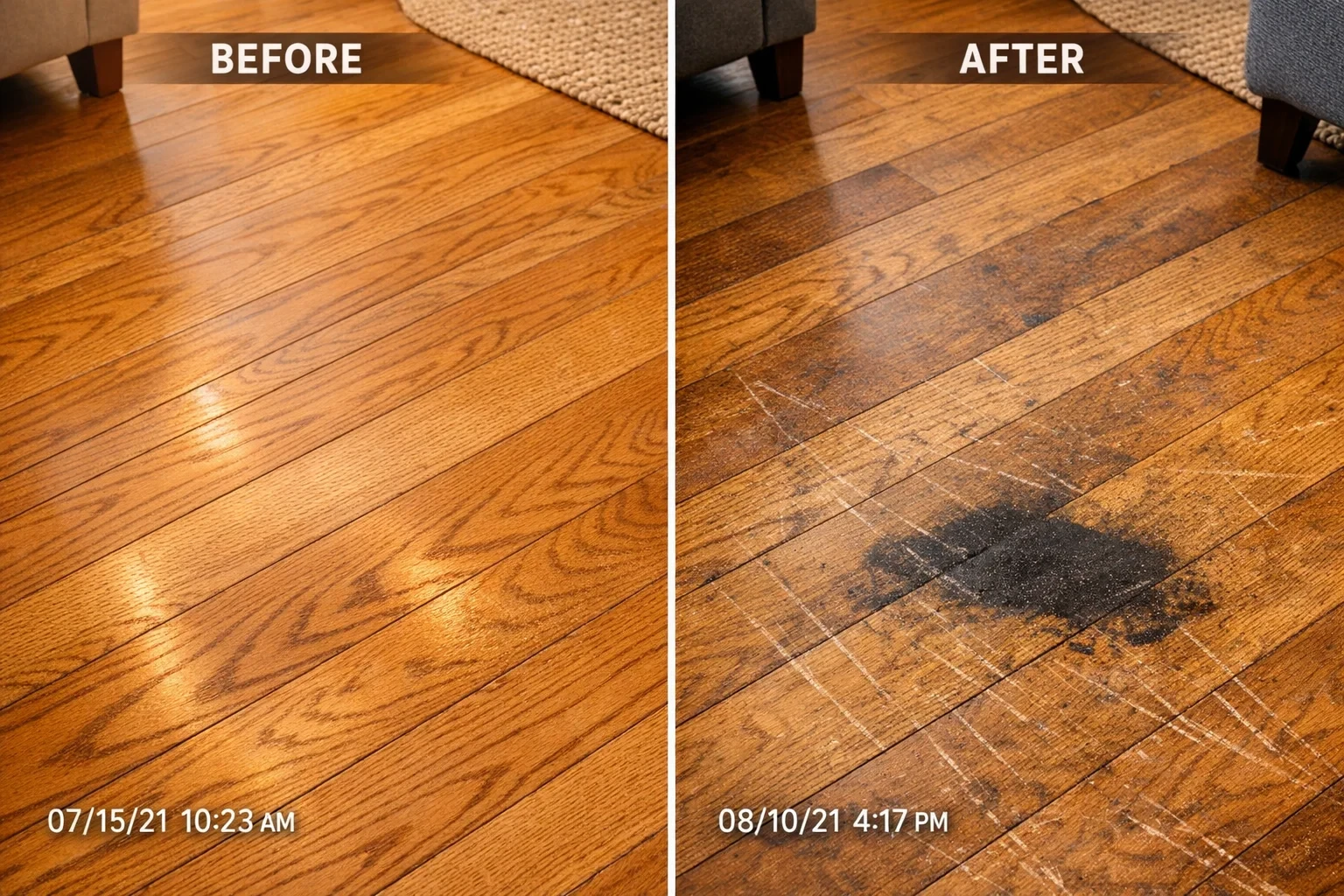
Flooring damage is one of those things that'll make you question why you got into this business. A guest checks out, your cleaner sends you a photo of a massive red wine stain on the carpet, and you think "okay, I'll just file a claim." Three weeks later you're arguing with Airbnb support about whether it's "wear and tear" while staring at a $4,000 replacement quote.
I've talked to enough property managers to know this is a universal experience. Flooring claims are some of the most expensive and most disputed damage types in short-term rentals. The problem isn't that platforms refuse to pay for legitimate damage. It's that proving when damage occurred is genuinely difficult without the right documentation.
What Flooring Damage Actually Costs
Before we get into why claims fail, let's talk numbers. These are 2025-2026 installed costs, so materials plus labor.
Flooring Type | Cost Per Sq Ft | 500 Sq Ft Total | 1,000 Sq Ft Total |
|---|---|---|---|
Carpet | $1,500-$5,500 | $3,000-$11,000 | |
Hardwood | $3,000-$12,500 | $6,000-$25,000 | |
LVP/LVT | $2,000-$8,000 | $4,000-$16,000 | |
Tile | $6,000-$25,000 | $12,000-$50,000 |
Hardwood refinishing runs $3-$8 per square foot, which is obviously better than full replacement if the damage is surface-level scratches. Carpet patching for burns or small stains averages around $25 per square foot, with most patches costing $125-$250.
The point is: flooring damage isn't cheap. Even "minor" damage can run into the thousands once you factor in labor.
Why Flooring Claims Get Denied
There are three main reasons flooring claims fail, and they're all related.
1. The "Wear and Tear" Classification
Both Airbnb and insurance providers explicitly exclude normal wear and tear from coverage. Airbnb's Host Damage Protection terms list "Wear and Tear" as an ineligible loss. Safely's damage coverage FAQ literally says "Flooring needs to be replaced periodically" when explaining what's not covered.
The problem is that "wear and tear" is subjective. A scratch on hardwood could be normal use or it could be from someone dragging furniture across the room. A stain could be gradual buildup or a single spill. Without visual proof of the floor's condition before that specific guest, platforms will often default to calling it wear and tear.
I've seen hosts in Airbnb community forums describe claims for scratched floors getting denied or drastically reduced because Airbnb classified them as wear and tear.
2. No Proof It Happened During That Stay
This is the big one. If you can't prove the damage occurred during a specific guest's stay, you don't have a claim. Period.
Airbnb community discussions emphasize how difficult it is to prove damage after another booking. If you had back-to-back guests and didn't document the floor condition between them, good luck attributing that carpet stain to either one.
Third-party analysis of common claim rejection reasons consistently lists "lack of before/after photos" as a top cause.
3. Depreciation Reduces Your Payout
Even when claims are approved, you probably won't get full replacement cost. Airbnb's terms specify that payouts consider "Actual Cash Value" including depreciation.
Here's where it gets frustrating. Standard carpet life expectancy is 8-10 years. The IRS classifies carpet in rental properties as 5-year property for depreciation purposes. So if your carpet is three years old and a guest destroys it, you might only get 40-60% of replacement cost even with a fully approved claim.
Hardwood has a much longer expected life (50-100+ years depending on the source), so depreciation hits less hard. But it's still a factor.
What the Platforms Actually Require
Airbnb
File within 14 days of checkout (Airbnb help)
Provide inventory details, receipts, repair estimates, proof of ownership, and invoices (documentation requirements)
Normal wear and tear is excluded
Payouts are based on actual cash value, not replacement cost
Vrbo
14 days after checkout to file a damage deposit claim (Vrbo help)
If a guest disputes, Vrbo requests documentation from both parties (dispute process)
Their Accidental Damage Protection through Generali covers unintentional damage but excludes excessive cleaning and intentional acts
Neither platform treats flooring differently than other property damage in their written policies. The difference is practical: flooring damage is harder to attribute to a specific incident, so it's more likely to be classified as wear and tear or denied for insufficient proof.
The Documentation Checklist
If you want flooring claims to stick, you need:
Before each stay:
Photos of all flooring, ideally with consistent angles and lighting
Close-ups of any existing imperfections (document them so they can't be blamed on the next guest)
Timestamped records
After each stay:
Same photos, same angles
Immediate documentation of any new damage
Professional repair estimates (not DIY guesses)
Receipts for original flooring installation if you have them
For the claim:
Side-by-side comparison showing the floor before and after
Clear timeline proving the damage occurred during that specific stay
Repair invoices from licensed contractors
The problem is obvious: who has time to take consistent photos of every floor in every property after every turnover? If you're managing 50+ units with constant turnovers, manual documentation at this level is basically impossible.
The Actual Solution: Baseline Comparison
This is exactly why we built RapidEye. The only reliable way to prove when floor damage occurred is to have a visual baseline you can compare against.
RapidEye processes the photos your cleaners are already taking in Breezeway and automatically compares them to previous records. When something changes, whether it's a new stain, scratch, or burn mark, the system flags it with timestamped evidence showing the before and after.
We've processed over a million photos for a single property management company. At that scale, no one's manually reviewing every image looking for carpet stains. But the AI catches changes that would otherwise go completely unnoticed until they become he-said-she-said disputes.
For flooring specifically, baseline comparison solves the core problem. You're not arguing about whether damage is wear and tear or a single incident. You have visual proof of the floor's condition before that guest checked in and after they left.
FAQ
What counts as wear and tear vs. damage?
There's no universal definition. Generally, gradual deterioration from normal use is wear and tear. Sudden damage from a specific incident (wine spill, cigarette burn, dragged furniture) is claimable. The key is proving it was sudden, not gradual.
How long do I have to file a claim?
Both Airbnb and Vrbo give you 14 days after checkout.
Will I get full replacement cost?
Probably not. Most platforms pay actual cash value, which factors in depreciation based on the flooring's age and expected lifespan.
What if I can't prove when the damage happened?
Your claim will likely be denied or classified as wear and tear. This is why baseline documentation matters so much for flooring.
Flooring damage is one of those things that'll make you question why you got into this business. A guest checks out, your cleaner sends you a photo of a massive red wine stain on the carpet, and you think "okay, I'll just file a claim." Three weeks later you're arguing with Airbnb support about whether it's "wear and tear" while staring at a $4,000 replacement quote.
I've talked to enough property managers to know this is a universal experience. Flooring claims are some of the most expensive and most disputed damage types in short-term rentals. The problem isn't that platforms refuse to pay for legitimate damage. It's that proving when damage occurred is genuinely difficult without the right documentation.
What Flooring Damage Actually Costs
Before we get into why claims fail, let's talk numbers. These are 2025-2026 installed costs, so materials plus labor.
Flooring Type | Cost Per Sq Ft | 500 Sq Ft Total | 1,000 Sq Ft Total |
|---|---|---|---|
Carpet | $1,500-$5,500 | $3,000-$11,000 | |
Hardwood | $3,000-$12,500 | $6,000-$25,000 | |
LVP/LVT | $2,000-$8,000 | $4,000-$16,000 | |
Tile | $6,000-$25,000 | $12,000-$50,000 |
Hardwood refinishing runs $3-$8 per square foot, which is obviously better than full replacement if the damage is surface-level scratches. Carpet patching for burns or small stains averages around $25 per square foot, with most patches costing $125-$250.
The point is: flooring damage isn't cheap. Even "minor" damage can run into the thousands once you factor in labor.
Why Flooring Claims Get Denied
There are three main reasons flooring claims fail, and they're all related.
1. The "Wear and Tear" Classification
Both Airbnb and insurance providers explicitly exclude normal wear and tear from coverage. Airbnb's Host Damage Protection terms list "Wear and Tear" as an ineligible loss. Safely's damage coverage FAQ literally says "Flooring needs to be replaced periodically" when explaining what's not covered.
The problem is that "wear and tear" is subjective. A scratch on hardwood could be normal use or it could be from someone dragging furniture across the room. A stain could be gradual buildup or a single spill. Without visual proof of the floor's condition before that specific guest, platforms will often default to calling it wear and tear.
I've seen hosts in Airbnb community forums describe claims for scratched floors getting denied or drastically reduced because Airbnb classified them as wear and tear.
2. No Proof It Happened During That Stay
This is the big one. If you can't prove the damage occurred during a specific guest's stay, you don't have a claim. Period.
Airbnb community discussions emphasize how difficult it is to prove damage after another booking. If you had back-to-back guests and didn't document the floor condition between them, good luck attributing that carpet stain to either one.
Third-party analysis of common claim rejection reasons consistently lists "lack of before/after photos" as a top cause.
3. Depreciation Reduces Your Payout
Even when claims are approved, you probably won't get full replacement cost. Airbnb's terms specify that payouts consider "Actual Cash Value" including depreciation.
Here's where it gets frustrating. Standard carpet life expectancy is 8-10 years. The IRS classifies carpet in rental properties as 5-year property for depreciation purposes. So if your carpet is three years old and a guest destroys it, you might only get 40-60% of replacement cost even with a fully approved claim.
Hardwood has a much longer expected life (50-100+ years depending on the source), so depreciation hits less hard. But it's still a factor.
What the Platforms Actually Require
Airbnb
File within 14 days of checkout (Airbnb help)
Provide inventory details, receipts, repair estimates, proof of ownership, and invoices (documentation requirements)
Normal wear and tear is excluded
Payouts are based on actual cash value, not replacement cost
Vrbo
14 days after checkout to file a damage deposit claim (Vrbo help)
If a guest disputes, Vrbo requests documentation from both parties (dispute process)
Their Accidental Damage Protection through Generali covers unintentional damage but excludes excessive cleaning and intentional acts
Neither platform treats flooring differently than other property damage in their written policies. The difference is practical: flooring damage is harder to attribute to a specific incident, so it's more likely to be classified as wear and tear or denied for insufficient proof.
The Documentation Checklist
If you want flooring claims to stick, you need:
Before each stay:
Photos of all flooring, ideally with consistent angles and lighting
Close-ups of any existing imperfections (document them so they can't be blamed on the next guest)
Timestamped records
After each stay:
Same photos, same angles
Immediate documentation of any new damage
Professional repair estimates (not DIY guesses)
Receipts for original flooring installation if you have them
For the claim:
Side-by-side comparison showing the floor before and after
Clear timeline proving the damage occurred during that specific stay
Repair invoices from licensed contractors
The problem is obvious: who has time to take consistent photos of every floor in every property after every turnover? If you're managing 50+ units with constant turnovers, manual documentation at this level is basically impossible.
The Actual Solution: Baseline Comparison
This is exactly why we built RapidEye. The only reliable way to prove when floor damage occurred is to have a visual baseline you can compare against.
RapidEye processes the photos your cleaners are already taking in Breezeway and automatically compares them to previous records. When something changes, whether it's a new stain, scratch, or burn mark, the system flags it with timestamped evidence showing the before and after.
We've processed over a million photos for a single property management company. At that scale, no one's manually reviewing every image looking for carpet stains. But the AI catches changes that would otherwise go completely unnoticed until they become he-said-she-said disputes.
For flooring specifically, baseline comparison solves the core problem. You're not arguing about whether damage is wear and tear or a single incident. You have visual proof of the floor's condition before that guest checked in and after they left.
FAQ
What counts as wear and tear vs. damage?
There's no universal definition. Generally, gradual deterioration from normal use is wear and tear. Sudden damage from a specific incident (wine spill, cigarette burn, dragged furniture) is claimable. The key is proving it was sudden, not gradual.
How long do I have to file a claim?
Both Airbnb and Vrbo give you 14 days after checkout.
Will I get full replacement cost?
Probably not. Most platforms pay actual cash value, which factors in depreciation based on the flooring's age and expected lifespan.
What if I can't prove when the damage happened?
Your claim will likely be denied or classified as wear and tear. This is why baseline documentation matters so much for flooring.