How Real-Time Inspection Guidance Works: Catching Missed Steps Before Checkout
Feb 3, 2026
Most property managers know they have a damage detection problem. But here's the thing: that's actually the second problem. The first problem is simpler and arguably more frustrating. Did my cleaner actually check everything?
If you're managing 50+ properties remotely, you already know what I'm talking about. You've got checklists. You've got photos coming in. But you have no idea if those photos actually represent a complete inspection or just someone snapping a few shots and calling it done.
The Verification Gap Is Real
Staffing in hospitality is brutal right now. According to the American Hotel & Lodging Association, 65% of surveyed hotels reported staffing shortages in early 2025, with housekeeping being the hardest position to fill at 38% of all open roles. Hotel employment is still nearly 10% below pre-pandemic levels.
Short-term rentals aren't immune to this. Hospitable's research found that 34.3% of hosts and property managers lost bookings or received negative reviews in 2025 due to staffing issues. Nearly 40% said it's difficult to find dependable local cleaning staff.
High turnover means constant training. Constant training means inconsistent quality. And inconsistent quality means you're hoping every turnover goes smoothly rather than knowing it did.
What Most Tools Actually Offer
There are solid operations platforms out there. Breezeway, Properly, Turnify. They all do digital checklists. They let you require photos for each task. Some have reference images so cleaners know what "done" looks like.
This is good. It's way better than nothing. But here's the gap: these tools document what was submitted. They don't verify what was actually captured during the inspection.
The workflow looks like this:
Cleaner opens checklist
Cleaner takes photos
Photos get uploaded
Manager reviews later (maybe)
That last step is the problem. According to a Rent Responsibly guide on turnover inspections, you're supposed to review these submissions to catch issues. But when you're processing dozens of turnovers a week across 100+ properties, who's actually looking at all those photos?
And even if you do review them, you're reviewing after the fact. The guest might already be checking in. The damage you spotted in a photo? Too late to fix before the next stay.
Real-Time Guidance Changes the Workflow
Real-time inspection guidance flips the model. Instead of reviewing documentation after it's submitted, you verify completeness while the inspection is happening.
Here's how it works with RapidEye:
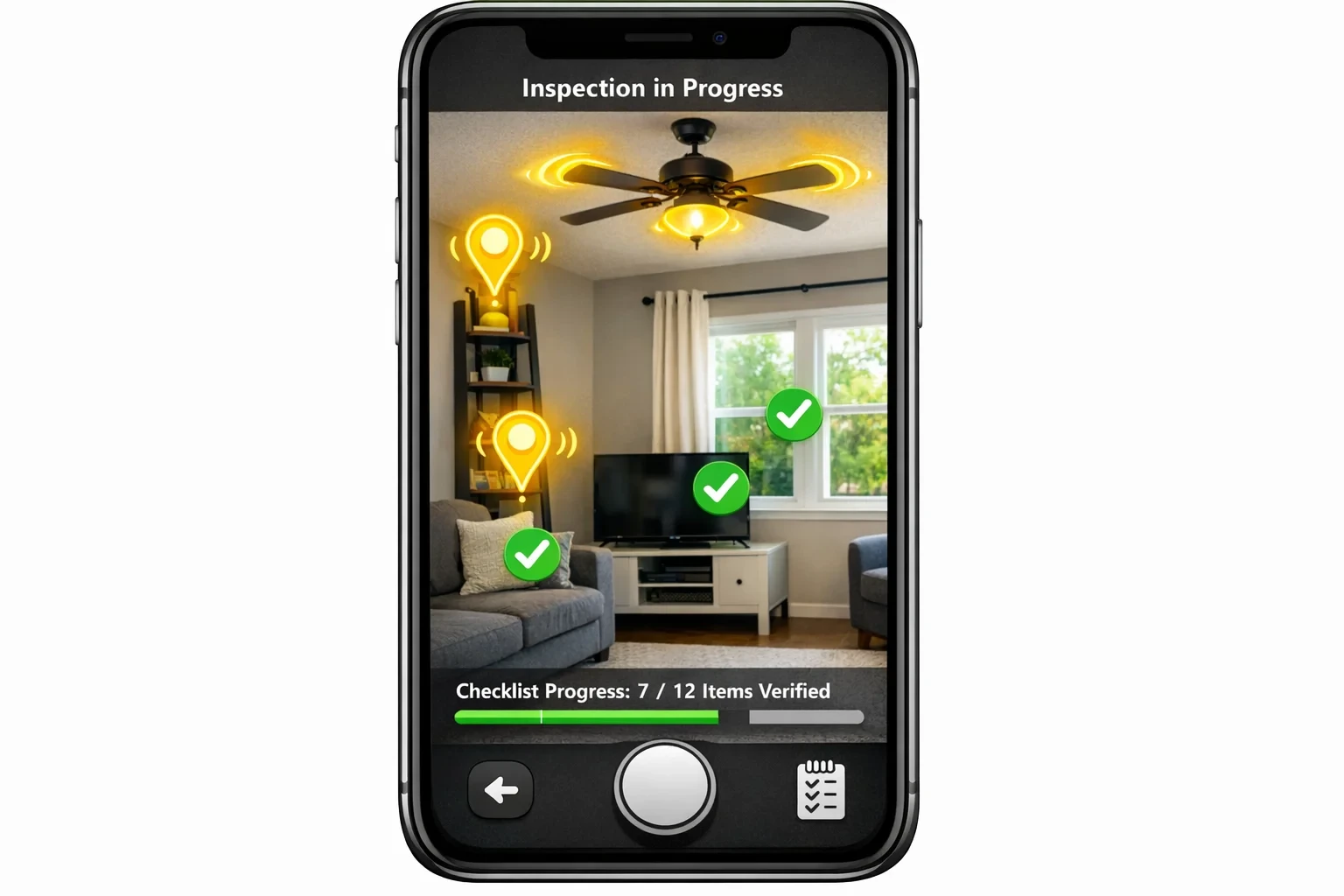
The cleaner or inspector captures video of the property. As they move through the space, our computer vision system is analyzing the footage in real-time. It knows what areas need to be documented based on the property's checklist and layout. If they skip a room, miss a key item, or don't capture something clearly enough, they get prompted immediately.
Think of it like GPS navigation. You don't just get a map and hope you figure it out. You get turn-by-turn directions and a "recalculating" alert when you go off course.
The inspection can't be marked complete until every required area and item has been verified on camera. No more hoping the checklist was followed. You know it was.
This Concept Exists in Other Industries
Real-time guided capture isn't new. It's just new to STR operations.
In insurance, companies like Truepic and Flyreel use AI to guide policyholders through property inspections. Truepic's platform prompts users to take required photos and videos, uses conditional logic in checklists, and runs real-time verification. They report that 70%+ of inspections complete in 10 minutes.
LexisNexis Flyreel describes their system as an "AI assistant that seamlessly guides" users through capture with computer vision documenting property details automatically.
The principle is the same: don't trust that someone followed instructions. Verify it in real-time with computer vision.
Practical Benefits for Property Managers
Fewer Callbacks and Rework
When issues get caught during the inspection, they can be fixed before the cleaner leaves. No more getting a guest complaint about the bathroom and realizing nobody actually checked it.
Accountability Without Micromanagement
You're not standing over anyone's shoulder. You're not reviewing every single photo submission manually. The system handles verification. You just see the results.
Better Documentation by Default
Every inspection produces complete visual documentation. This matters for damage disputes, insurance claims, and just knowing the actual condition of your properties over time.
Works for Remote Teams
If you're managing properties in multiple markets, you can't be everywhere. Real-time guidance gives you confidence in your remote teams without requiring constant oversight.
How This Complements Post-Inspection Analysis
Real-time guidance and post-inspection damage detection are two different things, and they work together.
Real-time guidance ensures the inspection actually happens completely. Every area documented, every checklist item verified on camera.
Post-inspection analysis compares that documentation against previous records to automatically detect changes. New scratches, stains, missing items, moved furniture.
One makes sure you capture everything. The other makes sure you catch everything.
With RapidEye, both happen automatically. The video captured during the guided inspection feeds directly into our damage detection system. So you get verification that the inspection was complete AND automatic flagging of any issues, all from the same workflow.
The Scale Problem
Here's what makes this actually important: scale.
A Key Data survey of 244 property management professionals found that 73% say staffing and revenue pressures are the biggest barriers to their 2026 business goals.
You're trying to grow your portfolio, but quality control doesn't scale with traditional methods. More properties means more turnovers, more photos, more opportunities for things to slip through. Manual review just can't keep up.
That's why we built RapidEye to handle verification automatically. We've processed over a million photos for a single client. At that volume, human review isn't just impractical. It's impossible.
What This Looks Like in Practice
Let's say you manage 150 properties with turnovers happening constantly across different markets.
Without real-time guidance: Your cleaners follow checklists (hopefully), take photos (some of them), upload to Breezeway, and move on. You review what you can, flag obvious problems, miss the subtle ones.
With real-time guidance: Every inspection captures complete documentation because the system won't let it close until it does. Those captures feed into damage detection automatically. Issues get flagged without you reviewing anything manually. You see reports on exceptions only.
Same number of properties. Same team. Way more confidence in what's actually happening.
If you're scaling a portfolio and wondering how you're going to maintain quality without hiring an army of inspectors, this is the answer. Not more people reviewing photos. Smarter systems that verify completeness in real-time and detect issues automatically.
That's what we're building at RapidEye.
Most property managers know they have a damage detection problem. But here's the thing: that's actually the second problem. The first problem is simpler and arguably more frustrating. Did my cleaner actually check everything?
If you're managing 50+ properties remotely, you already know what I'm talking about. You've got checklists. You've got photos coming in. But you have no idea if those photos actually represent a complete inspection or just someone snapping a few shots and calling it done.
The Verification Gap Is Real
Staffing in hospitality is brutal right now. According to the American Hotel & Lodging Association, 65% of surveyed hotels reported staffing shortages in early 2025, with housekeeping being the hardest position to fill at 38% of all open roles. Hotel employment is still nearly 10% below pre-pandemic levels.
Short-term rentals aren't immune to this. Hospitable's research found that 34.3% of hosts and property managers lost bookings or received negative reviews in 2025 due to staffing issues. Nearly 40% said it's difficult to find dependable local cleaning staff.
High turnover means constant training. Constant training means inconsistent quality. And inconsistent quality means you're hoping every turnover goes smoothly rather than knowing it did.
What Most Tools Actually Offer
There are solid operations platforms out there. Breezeway, Properly, Turnify. They all do digital checklists. They let you require photos for each task. Some have reference images so cleaners know what "done" looks like.
This is good. It's way better than nothing. But here's the gap: these tools document what was submitted. They don't verify what was actually captured during the inspection.
The workflow looks like this:
Cleaner opens checklist
Cleaner takes photos
Photos get uploaded
Manager reviews later (maybe)
That last step is the problem. According to a Rent Responsibly guide on turnover inspections, you're supposed to review these submissions to catch issues. But when you're processing dozens of turnovers a week across 100+ properties, who's actually looking at all those photos?
And even if you do review them, you're reviewing after the fact. The guest might already be checking in. The damage you spotted in a photo? Too late to fix before the next stay.
Real-Time Guidance Changes the Workflow
Real-time inspection guidance flips the model. Instead of reviewing documentation after it's submitted, you verify completeness while the inspection is happening.
Here's how it works with RapidEye:
The cleaner or inspector captures video of the property. As they move through the space, our computer vision system is analyzing the footage in real-time. It knows what areas need to be documented based on the property's checklist and layout. If they skip a room, miss a key item, or don't capture something clearly enough, they get prompted immediately.
Think of it like GPS navigation. You don't just get a map and hope you figure it out. You get turn-by-turn directions and a "recalculating" alert when you go off course.
The inspection can't be marked complete until every required area and item has been verified on camera. No more hoping the checklist was followed. You know it was.
This Concept Exists in Other Industries
Real-time guided capture isn't new. It's just new to STR operations.
In insurance, companies like Truepic and Flyreel use AI to guide policyholders through property inspections. Truepic's platform prompts users to take required photos and videos, uses conditional logic in checklists, and runs real-time verification. They report that 70%+ of inspections complete in 10 minutes.
LexisNexis Flyreel describes their system as an "AI assistant that seamlessly guides" users through capture with computer vision documenting property details automatically.
The principle is the same: don't trust that someone followed instructions. Verify it in real-time with computer vision.
Practical Benefits for Property Managers
Fewer Callbacks and Rework
When issues get caught during the inspection, they can be fixed before the cleaner leaves. No more getting a guest complaint about the bathroom and realizing nobody actually checked it.
Accountability Without Micromanagement
You're not standing over anyone's shoulder. You're not reviewing every single photo submission manually. The system handles verification. You just see the results.
Better Documentation by Default
Every inspection produces complete visual documentation. This matters for damage disputes, insurance claims, and just knowing the actual condition of your properties over time.
Works for Remote Teams
If you're managing properties in multiple markets, you can't be everywhere. Real-time guidance gives you confidence in your remote teams without requiring constant oversight.
How This Complements Post-Inspection Analysis
Real-time guidance and post-inspection damage detection are two different things, and they work together.
Real-time guidance ensures the inspection actually happens completely. Every area documented, every checklist item verified on camera.
Post-inspection analysis compares that documentation against previous records to automatically detect changes. New scratches, stains, missing items, moved furniture.
One makes sure you capture everything. The other makes sure you catch everything.
With RapidEye, both happen automatically. The video captured during the guided inspection feeds directly into our damage detection system. So you get verification that the inspection was complete AND automatic flagging of any issues, all from the same workflow.
The Scale Problem
Here's what makes this actually important: scale.
A Key Data survey of 244 property management professionals found that 73% say staffing and revenue pressures are the biggest barriers to their 2026 business goals.
You're trying to grow your portfolio, but quality control doesn't scale with traditional methods. More properties means more turnovers, more photos, more opportunities for things to slip through. Manual review just can't keep up.
That's why we built RapidEye to handle verification automatically. We've processed over a million photos for a single client. At that volume, human review isn't just impractical. It's impossible.
What This Looks Like in Practice
Let's say you manage 150 properties with turnovers happening constantly across different markets.
Without real-time guidance: Your cleaners follow checklists (hopefully), take photos (some of them), upload to Breezeway, and move on. You review what you can, flag obvious problems, miss the subtle ones.
With real-time guidance: Every inspection captures complete documentation because the system won't let it close until it does. Those captures feed into damage detection automatically. Issues get flagged without you reviewing anything manually. You see reports on exceptions only.
Same number of properties. Same team. Way more confidence in what's actually happening.
If you're scaling a portfolio and wondering how you're going to maintain quality without hiring an army of inspectors, this is the answer. Not more people reviewing photos. Smarter systems that verify completeness in real-time and detect issues automatically.
That's what we're building at RapidEye.